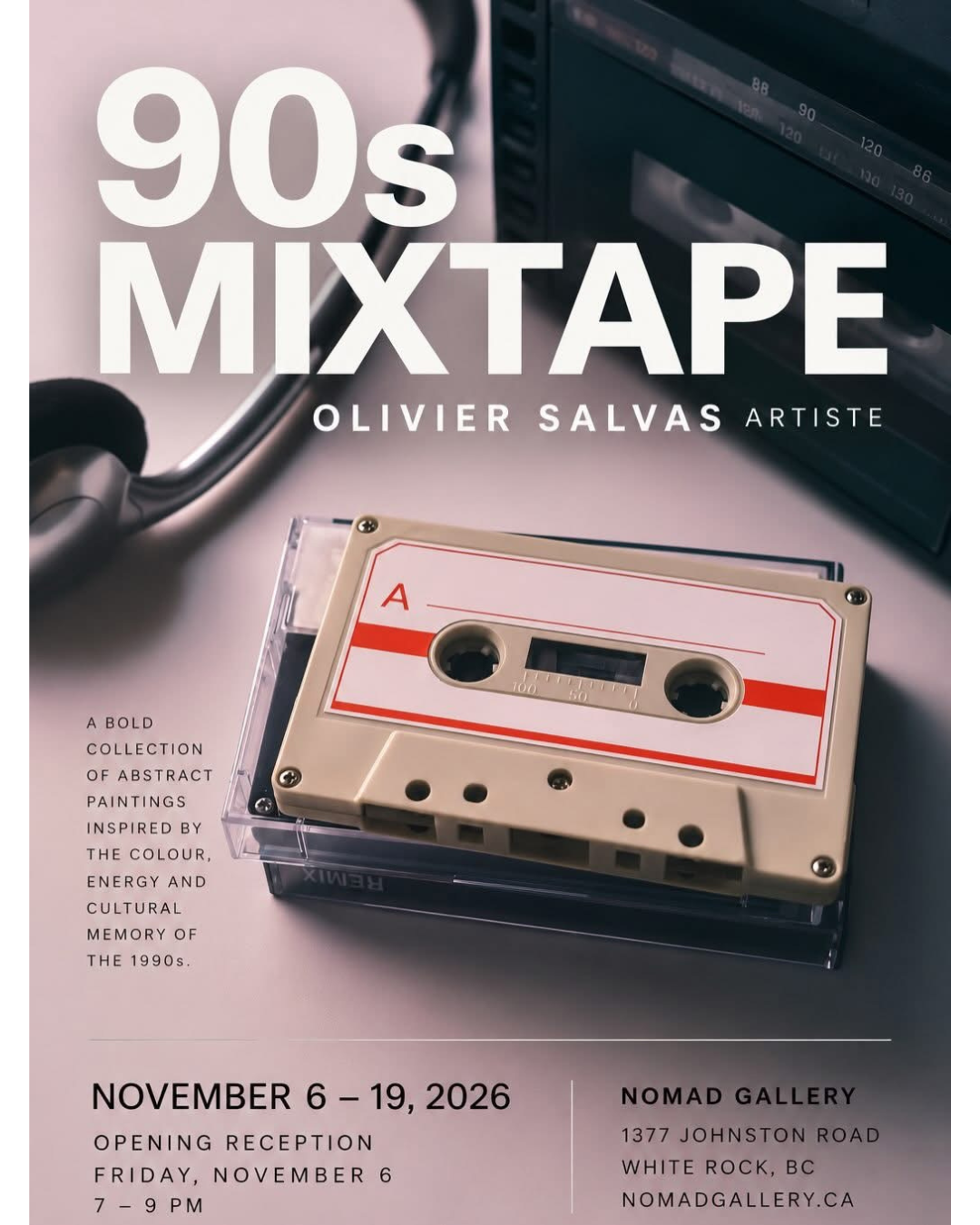
What’s behind The 90s Mixtape? Nomad Gallery asked me about the memories, music and colours that shaped the exhibition, and I loved the chance to share more of its story. Here’s our complete Q&A, a look into my creative process and the decade that still feels like comfort food to me.
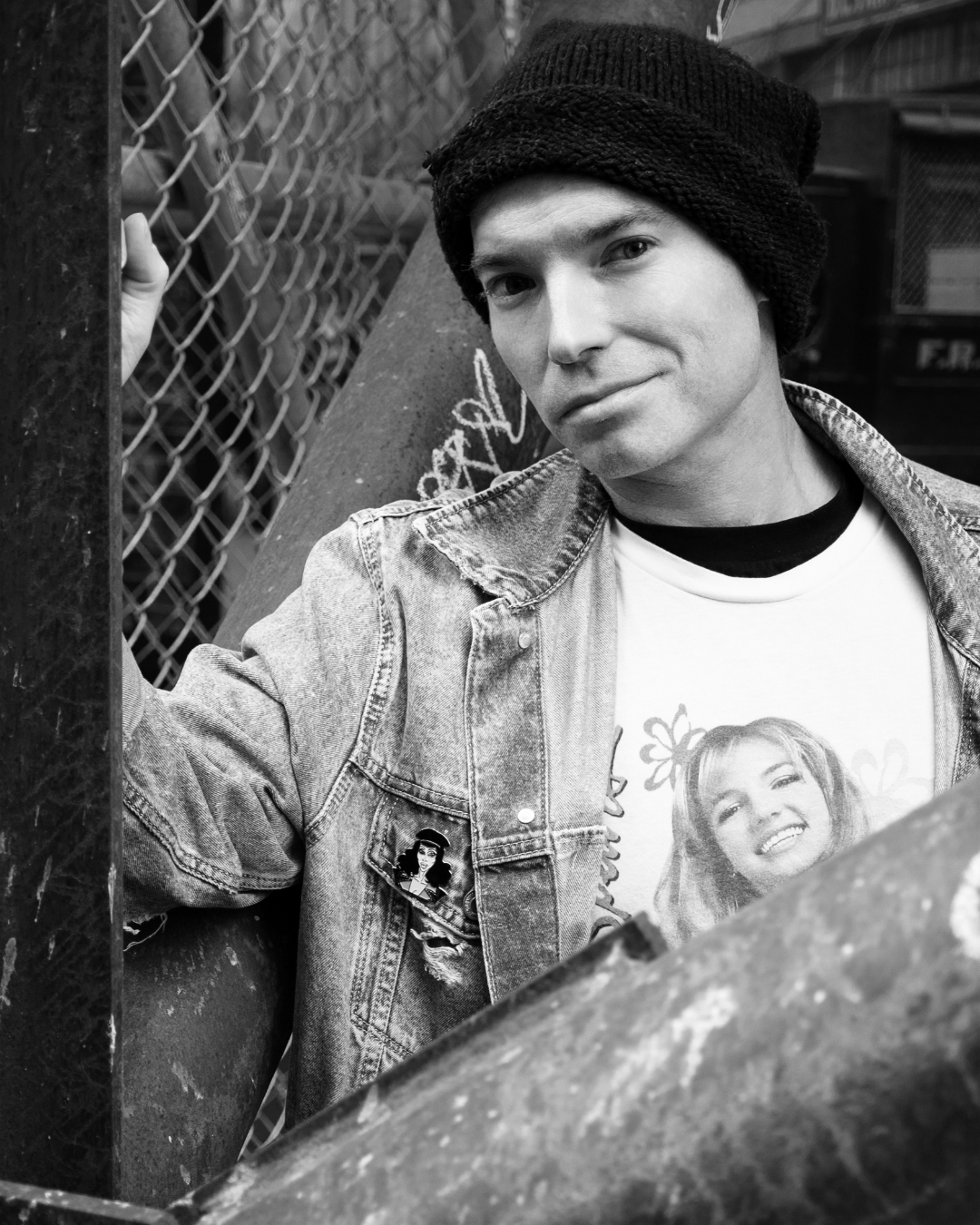
Photography by Rory McLeod
Behind the artwork: Is there a particular piece in 90’s Mixtape that has a story behind it or feels especially personal to you?
I wouldn’t say there’s one particular piece that feels more personal than another. I think it’s the collection as a whole that is deeply personal to me. The 90s were such a defining decade in shaping who I am today, both as a person and as an artist. Growing up in Montreal, I was fascinated by the music, fashion, underground culture, and the individuality of people who weren’t afraid to express themselves differently. That freedom of expression really stayed with me and continues to influence my work today. When I look at the paintings I’ve created for THE 90s, I see little pieces of those influences coming together. The bold colours, the contrasts, the energy, and even the quieter moments all reflect memories and feelings from that time. In many ways, each painting carries a little piece of the decade that helped shape my artistic identity. But THE 90s is also about more than nostalgia. It asks a question: Where did the colours go? It’s my way of reflecting on individuality, self-expression, and how we celebrate our differences in today’s world. I’ve always believed that art can be a gentle way of opening conversations about topics that might otherwise feel divisive. Colour and beauty can draw people in, and hopefully, the meaning behind the work encourages them to look a little deeper. So perhaps that’s why I can’t choose just one painting. Together, they tell a much bigger story, one about the influences that made me who I am and my hope that art can help us build a more colourful, curious, and inclusive world.
Your process: How do you approach a new painting? Do you start with an idea, or let the work evolve as you go?
I don’t necessarily approach each painting individually. I usually start with a bigger concept or a question I want to explore. My creative process is rooted in a/r/tography, which brings together my work as an artist, researcher, and educator. For THE 90s, everything started with one question: “Where did the colours go?”From there, I completely immersed myself in the decade. I revisited 90s movies, literature, music, and cultural movements, almost stepping into the shoes of different characters to understand the energy of the time. For the original THE 90s exhibition, I explored the colourful underground scene, club kids, and rave culture. With THE 90s Mixtape, I shifted toward the grunge era, drawing inspiration from graffiti, spoken word artists, and the alternative rock scene that emerged during that decade. I researched colour palettes that captured those different moods, experimented with techniques, and spent countless hours listening to 90s music while painting. Photography also plays a role in bringing the concept to life, helping me create a visual identity and character for each project. Once I have that foundation, I let the paintings evolve naturally. I want each piece to have its own personality while contributing to the bigger story. In a way, the paintings become a visual soundtrack, translating the music, emotions, and cultural influences I’ve explored into colour, texture, and movement. Each painting is like a different track, but together, they create the mixtape.
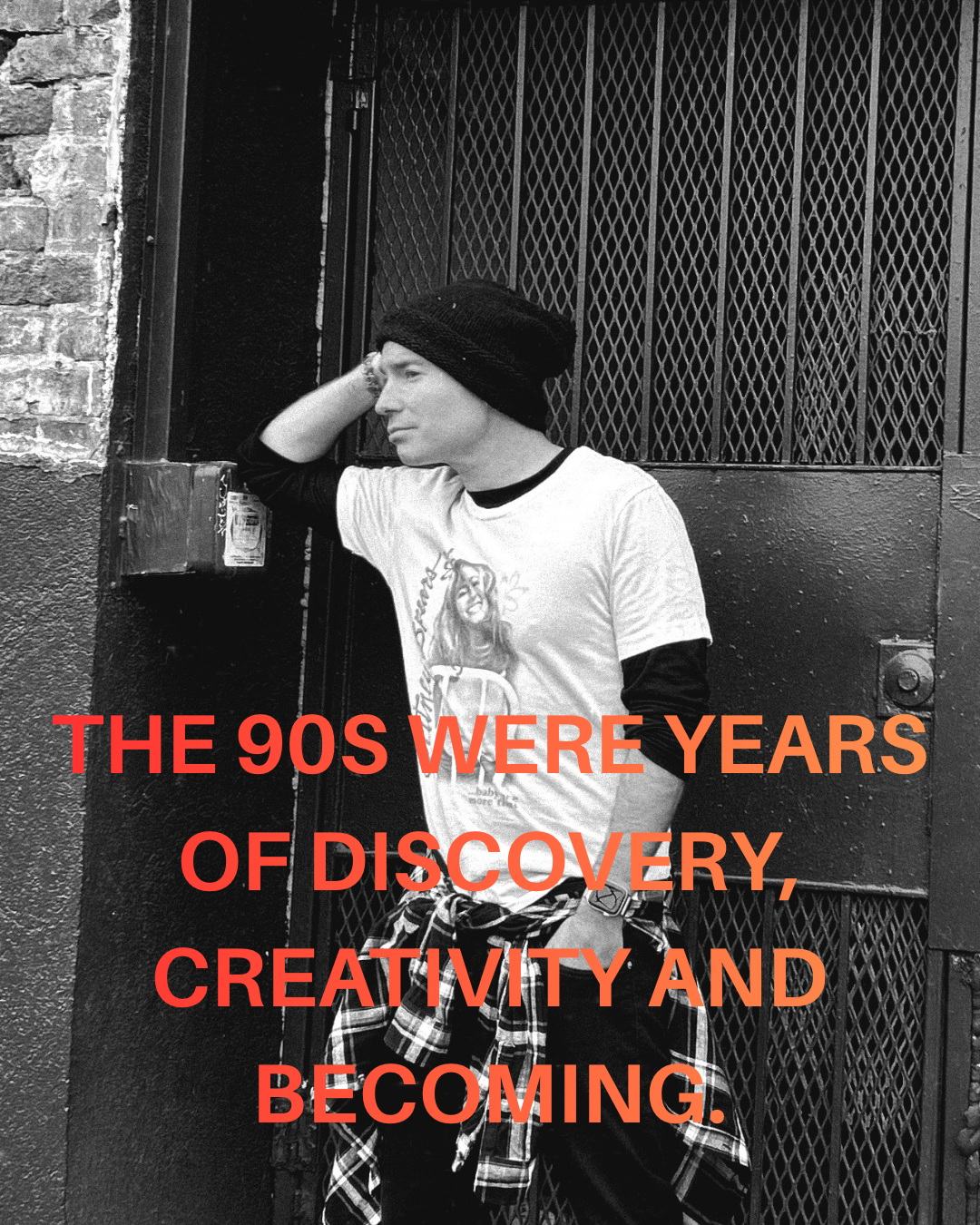
Photography by Rory McLeod
The inspiration: How have your own experiences or memories of the 90s influenced this body of work?
I was pretty young in the 90s. Most of my childhood and early teenage years happened during that decade, so my memories are very much shaped by seeing the world through a child’s eyes. For me, the 90s are almost like comfort food. There’s something about revisiting the music, colours, and cultural moments of that era that brings me back to my inner child. It’s a place I can return to in my mind that feels familiar and comforting. I remember how colourful everything seemed! Houses had turquoise, purple, forest green, and orange. Cars came in all sorts of colours, and even music felt incredibly diverse. You could turn on the radio and hear a Céline Dion power ballad, followed by a grunge song, and then Salt-N-Pepa, all within the same hour! Looking back at those memories made me wonder: Where did all the colours go? Why does everything seem so beige today? It’s not about judging the present or suggesting that the past was better. I’m more interested in how trends, culture, and society move through cycles, and why we sometimes find ourselves returning to particular moments in our lives. I think that’s what makes THE 90s so personal to me. It started as a way of reconnecting with my own memories and finding comfort in them, but it gradually became a broader reflection on colour, individuality, and the world we live in today. In a way, I’m using my own childhood memories to explore a much bigger question about how we change, both individually and collectively.
Your story: What first drew you to painting, and was there a moment when you knew you wanted to pursue art?
I don’t think there was one particular moment when I decided to become an artist. Looking back, I think the foundations were always there, but it took me years to connect the dots. My grandmother was a painter, and I grew up watching her paint. She often babysat me, so art was always part of my childhood. As a teenager growing up in Montreal, I attended a fairly strict private school, but outside of school, I was discovering a completely different world. I became fascinated by Montreal’s underground scene, drag performers, club kids, and performance artists who transformed themselves into living works of art. At a time when I was exploring my own identity, seeing people express themselves so freely had a lasting impact on me. I think that’s where my fascination with creating characters and telling stories through art began.
After high school, I studied fine arts in college, where I explored different techniques and discovered art history. I remember being particularly drawn to abstract painters like Paul-Émile Borduas and Jean-Paul Riopelle. Their work fascinated me, and I remember thinking how much I would love to create something like that someday, although I had no idea how to get there. Years later, while completing my master’s degree, I discovered a/r/tography, which helped me connect my passion for education, research, and visual arts. Suddenly, things started making sense. I realized I could use art as a form of storytelling, bringing together photography, characters, research, poetry, and painting into one larger project. But one of the most meaningful turning points came shortly after my grandmother passed away. I inherited her watercolours and used them to create a painting of a horse in motion called Strength. That painting is still in my living room today. It was one of the first times I looked at something I had created and thought, maybe I could actually pursue this as an artist. Over time, painting became a bigger part of my storytelling, and I began developing my own abstract style. Eventually, I realized that my paintings could stand on their own while still being part of a larger narrative.So I don’t think I ever set out specifically to become an abstract painter. It happened naturally, through years of curiosity, exploration, and experiences that eventually came together. And perhaps that’s what I love most about being an artist. I’m still discovering where those connections will take me.
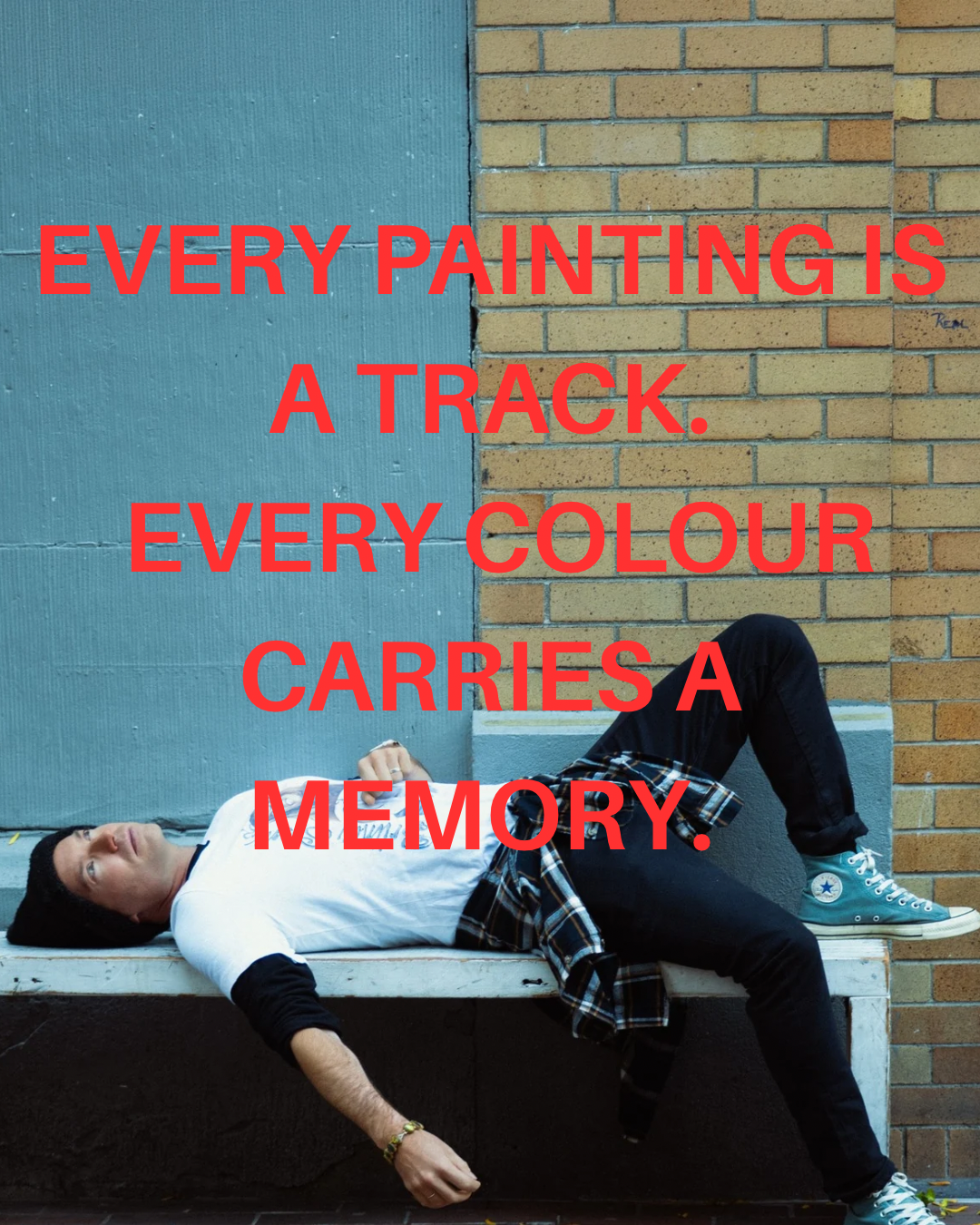
Photography by Rory McLeod
Music in the studio: Do you listen to music while you paint? If so, what’s usually playing?
Absolutely! Music is a huge part of my creative process. I intentionally listen to music that connects with the era or theme I’m exploring because, to me, abstract art is deeply emotional. I’m not necessarily painting what I see, but what I feel. When I paint, I try to immerse myself in a particular memory, atmosphere, or emotion. The music helps me get there, and those feelings influence everything from my colour choices to the movement of my brushstrokes.For THE 90s, my playlist was all over the place! Listening to Britney Spears might inspire bright colours and playful drips, while Nirvana or Green Day would take me somewhere completely different, imagining garages, graffiti-covered streets, and darker shades of blue and brown. Late-90s house music brought me back to club culture and candy ravers, with their neon greens, hot pinks, and energetic movements. Then there were the quieter moments, listening to the Dawson’s Creek soundtrack and remembering the cosy interiors of the 90s.Even Alanis Morissette brought back memories of childhood road trips, stopping at gas stations and collecting those Esso cups decorated with Canadian landscapes. Those memories actually influenced some of the mountain paintings in the collection! I think that’s what I love about abstract painting. Music allows me to reconnect with emotions and memories, and then translate those feelings into colour, texture, and movement. In many ways, the music becomes part of the painting itself. It’s almost as if every canvas has its own soundtrack.
Your 90s mixtape: If you were making a mixtape of your favourite 90s songs, what three tracks would make the cut and why?
That’s not really fair! How am I supposed to choose only three songs from an entire decade? Haha!But if I had to narrow it down to three artists, I’d probably go with Green Day, Alanis Morissette, and the Spice Girls.Green Day brings me back to the alternative rock scene, that raw, unpolished energy, and the grunge-inspired side of the 90s that I’ve been exploring in THE 90s Mixtape. Alanis Morissette is pure nostalgia for me. Her music reminds me of childhood road trips, growing up in Canada, and those moments when a song becomes forever connected to a memory.And the Spice Girls! They represent the colourful, playful, and unapologetically fun side of the decade. I recently saw Melanie C perform in Vancouver, and when she started singing “Viva Forever,” I suddenly felt like a little kid again. It’s amazing how music can bring you right back to a particular moment in your lifeI think those three artists capture what I love most about the 90s. They each represent a different mood, a different memory, and a different colour of the decade. In many ways, that’s exactly what THE 90s Mixtape is about!
Come experience the colours, memories and music of The 90s Mixtape in person at Nomad Gallery in White Rock, on view until November 19, 2026.